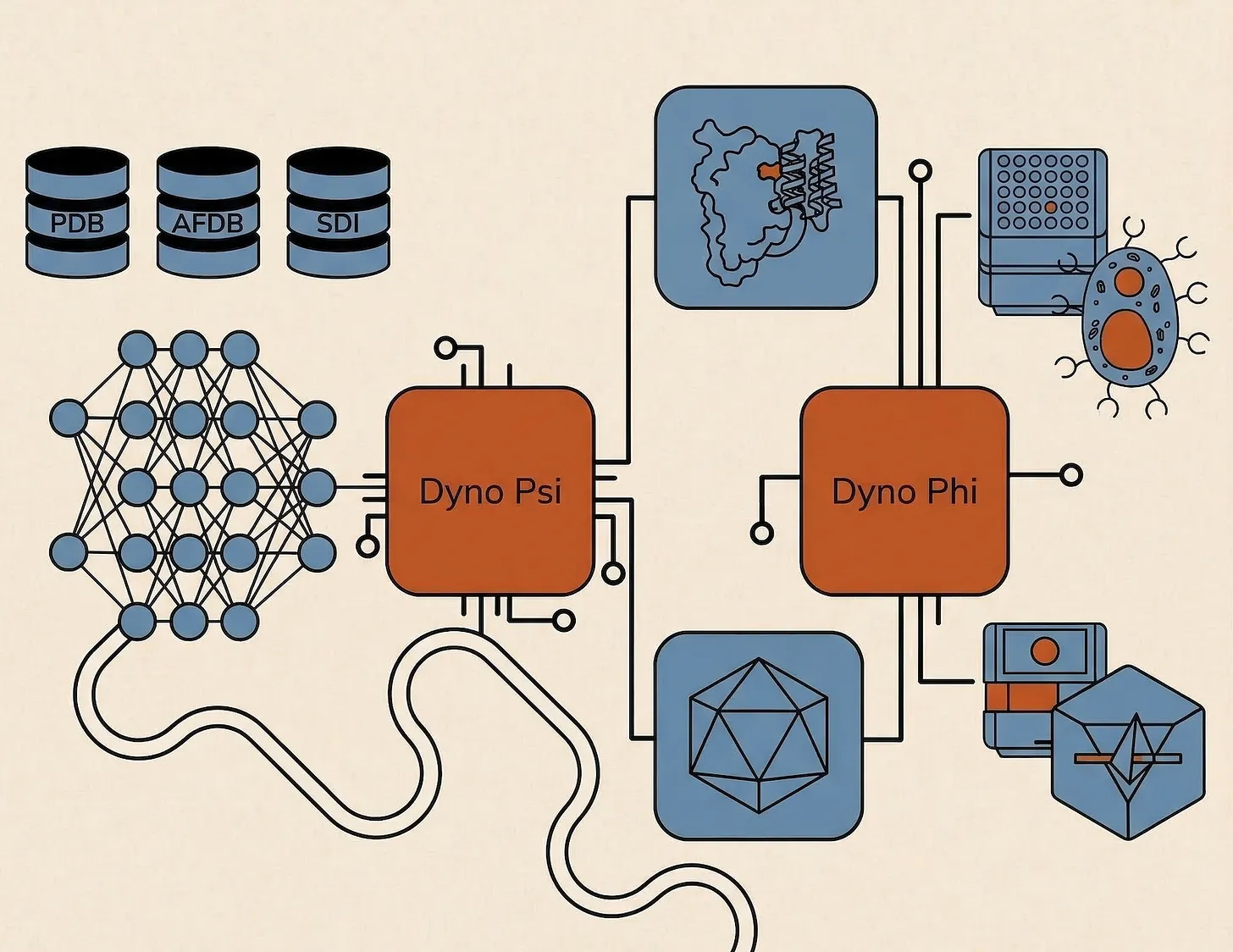
Can AI agents solve the “last mile” problem in generative therapeutic design?
Genetic agency, an individual’s ability to take action at the genetic level to live a healthier life, depends on creating therapies where none exist today. Designing these therapeutics is extraordinarily complex. Dyno Therapeutics is accelerating this process through the careful application of AI and domain expertise, and sharing it with the gene therapy community through initiatives like the Genetic Agency Technology Conference (GATC).
At Dyno, our cutting-edge data systems and frontier models are tailored to solve the toughest challenges in gene therapy. Our scientists and engineers wield these tools with care, passion, and deep expertise to distill hundreds of thousands of experimental proteins into a handful of promising candidates that have been proven in vivo. Yet this progress alone isn’t enough. To reach patients faster, we need to amplify it. Agentic AI is one catalyst that makes that possible.
AI Agents
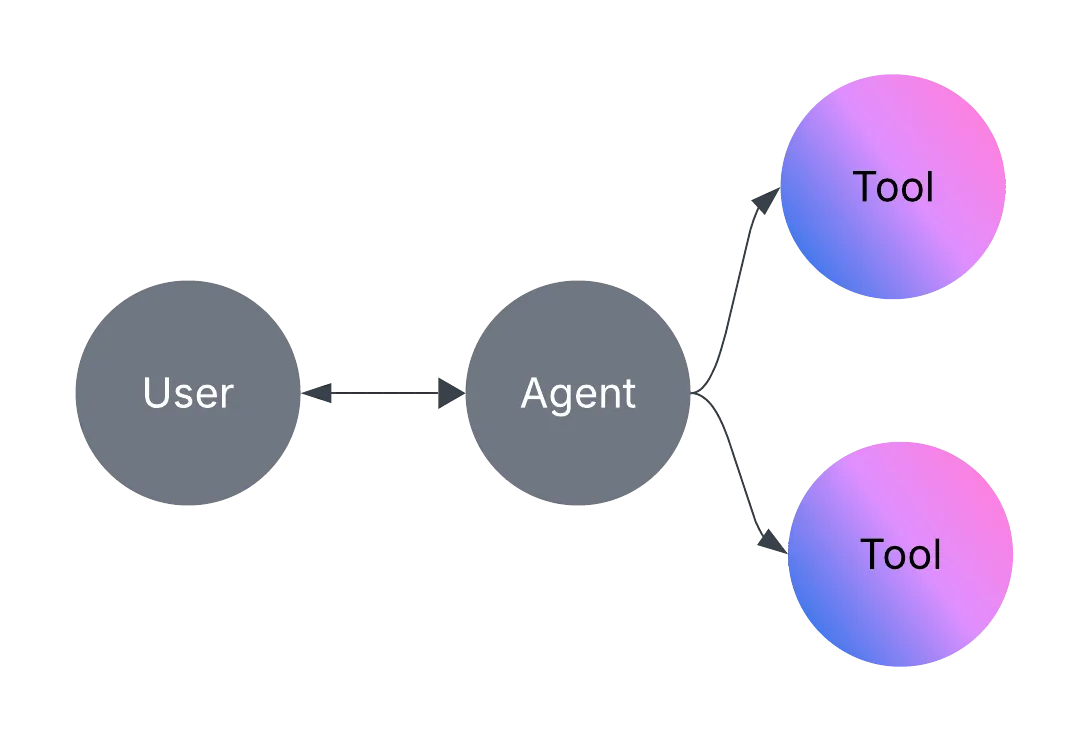
An agent is a software system designed to make autonomous decisions based on its environment and inputs, then take actions to achieve specific objectives. This differs from traditional LLMs like ChatGPT because it’s not just returning text in response to a prompt, but taking specific actions like writing and executing code, or using software provided to it as tools in response to a user request or an automated event. This paradigm unlocks powerful interactions in natural language to solve real-world problems.
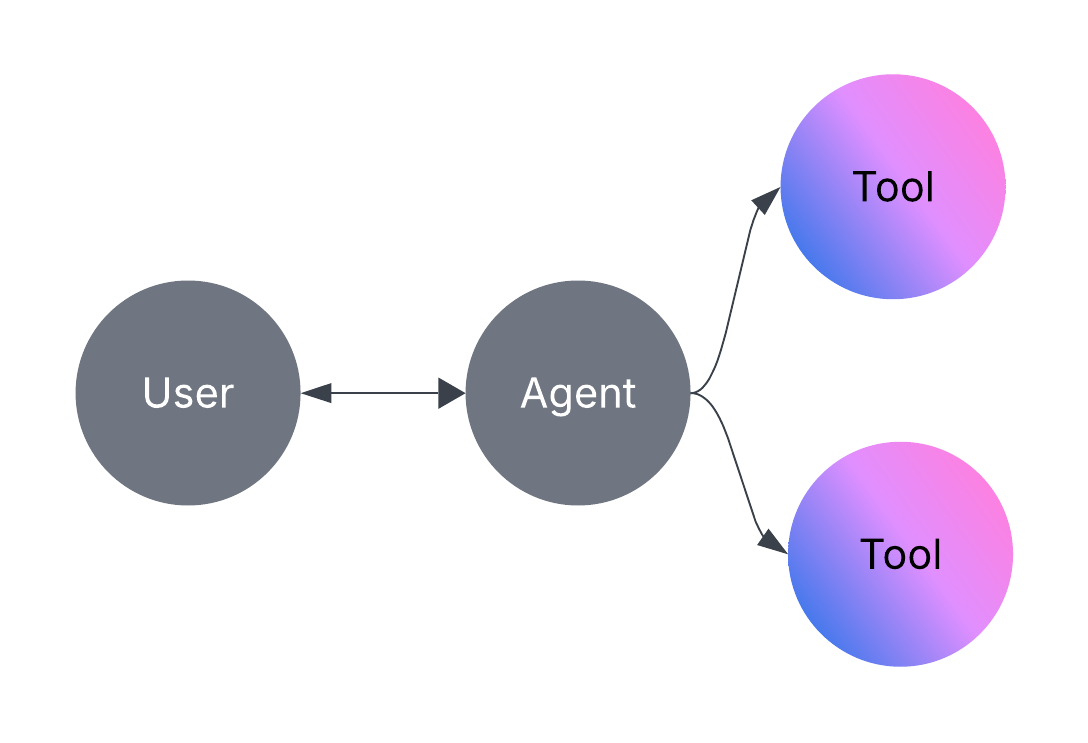
At Dyno, we are already deploying such agents to accelerate the path toward genetic agency. We don’t just use general-purpose AI: we’re building agentic systems that understand our science and systems deeply enough to solve our problems. Even with the most advanced AI models, the hardest is integrating intelligence into our real-world systems and workflows. That’s the “last mile.”
The “last-mile” problem
To understand the challenges in front of us today when integrating AI into our platform and processes, let’s consider a different form of delivery: international shipping. The global system is astonishingly efficient. Until the last mile, when a human courier must interpret the nuances of local delivery.
The same principle applies to generative AI in therapeutic design. Foundation models and general-purpose tools can handle broad, standardized tasks with impressive efficiency. Many products exist that offer you the latest and greatest models, but without the scientific expertise to use them well.
To truly traverse the “last mile,” an AI system must grasp not only our models, APIs and workflows but the scientific reasoning and moral imperative behind our work: connecting data to molecular biology, experimental design, and discovery decisions. At Dyno we are already applying several types of agents in our scientific workflows.
Parser agent
All technology companies move data through complex workflows and pipelines. At Dyno, our systems convert raw lab experiments into the data that powers our models and product discovery. Yet this system still requires some manual oversight.
Enter Parser, an autonomous agent connected directly to our data systems and APIs, and tuned with expert knowledge of how our pipeline operates. As detailed in our technical backgrounder, this agentic approach lets AI participate in both the data flow and decision flow, saving critical time. Scientists trust Parser to manage their complex data, freeing us to focus on interpreting biological results and designing new experiments: the creative, high-value parts of discovery.
Knowledge agent
Like many companies, we have information from years of progress scattered across internal documents and data systems. Knowledge agent extracts key information about our most promising products and programs and distills them into executive summaries, allowing users to understand the history of gene therapy products at Dyno at a glance, while also chatting with the agent for more in-depth expertise.
Structure agent
Our latest AI agent, Structure, began as a ‘what if?’ at a Dyno AI Hackathon. Frustrated by the limitations of PyMol, our scientists wondered if we could ‘duct-tape a chatbot to a structure viewer.’ That experiment evolved into an agentic system orchestrating internal and external APIs to streamline reasoning about protein structures, receptor targets, and payload design.
The result: an agent that lightens the cognitive load of molecular reasoning and turns natural language prompts into publication-ready insights.
p0 - sickle cell demo - watch video
The future of agentic therapeutic development
We are standing at a pivotal moment in generative AI. While many vendors now offer AI copilots and coding agents that handle general problem-solving tasks, the gap between general reasoning and the last mile of domain-specific discovery remains wide. In therapeutic design, success depends not on generic insights but on understanding the data, biology, and decisions that define our unique scientific landscape.
Through our experience building agentic systems at Dyno, several lessons have become clear:
- Expert knowledge still outperforms general AI. Research agents might propose receptor targets from published literature, but our teams have often explored and ruled out those directions. Agents must therefore be informed by domain expertise, not replace it.
- Trust requires ground truth. Large language models are non-deterministic and sometimes fabricate or overconfirm information. Building trustable systems demands deliberate evaluation, calibration, and guardrails to align model confidence with biological reality.
- Bespoke systems are a strength, not a flaw. Dyno’s infrastructure is purpose-built for challenges no one else in biotech is addressing with AI. To give AI agents meaningful autonomy, we must carefully design how our APIs, knowledge graphs, and reasoning processes are exposed through interfaces such as REST and model context protocol (MCP) servers.
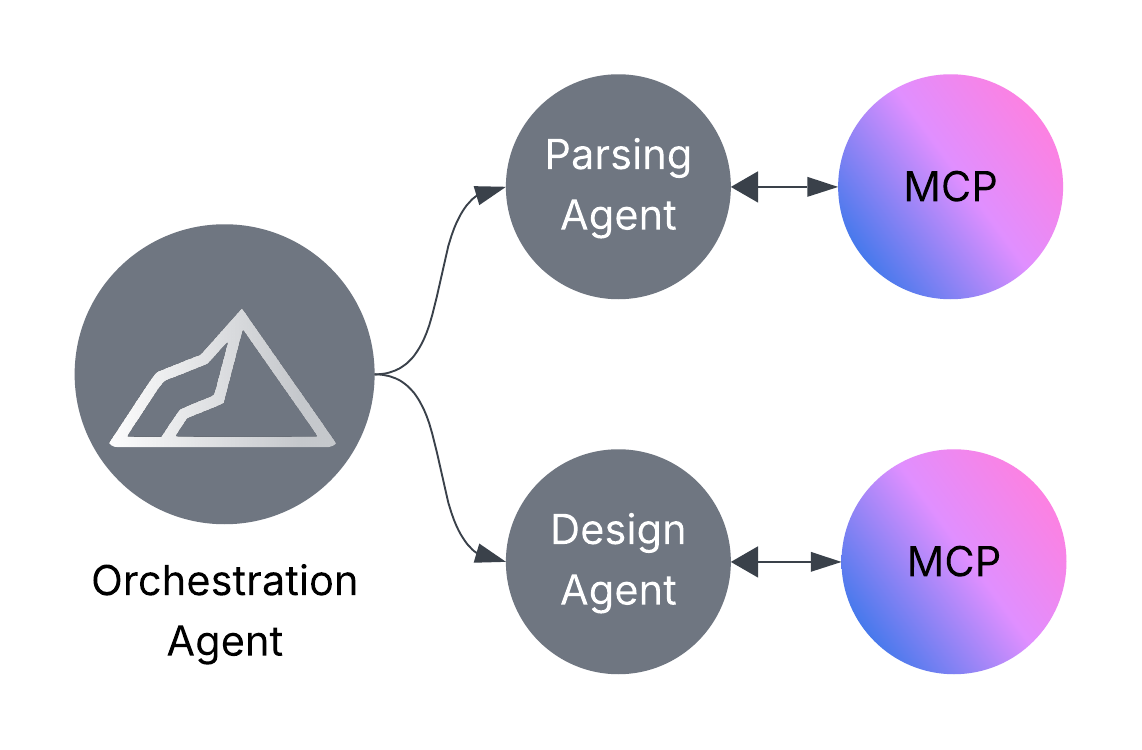
Agent networks as the final mile of scientific delivery
The next breakthrough will not come from a single, all-knowing model but from networks of specialized AI co-scientists. Each agent will focus on a defined scientific task, analyzing NGS data, reasoning about structural dynamics, or interpreting assay results, and share context with others through secure orchestration layers.
This distributed and cooperative model reflects how science itself works: multiple experts contributing insights that, when connected, accelerate discovery. In this way, agent networks can truly deliver the final mile of scientific delivery, translating intelligence into tangible progress toward genetic agency.
Toward true genetic agency
Ultimately, genetic agency is about choice: empowering patients and families to shape their genetic future. AI agents have a key role to play, not only in the lab but eventually in patient-facing applications: bridging discovery, design, and decision.
At Dyno Therapeutics, we’re taking the first steps toward that future by sparking a broader conversation about how agentic AI systems aligned with the goal of curing genetic disease can accelerate genetic agency itself.