Dyno Psi-Phi: Shaping new futures for protein design
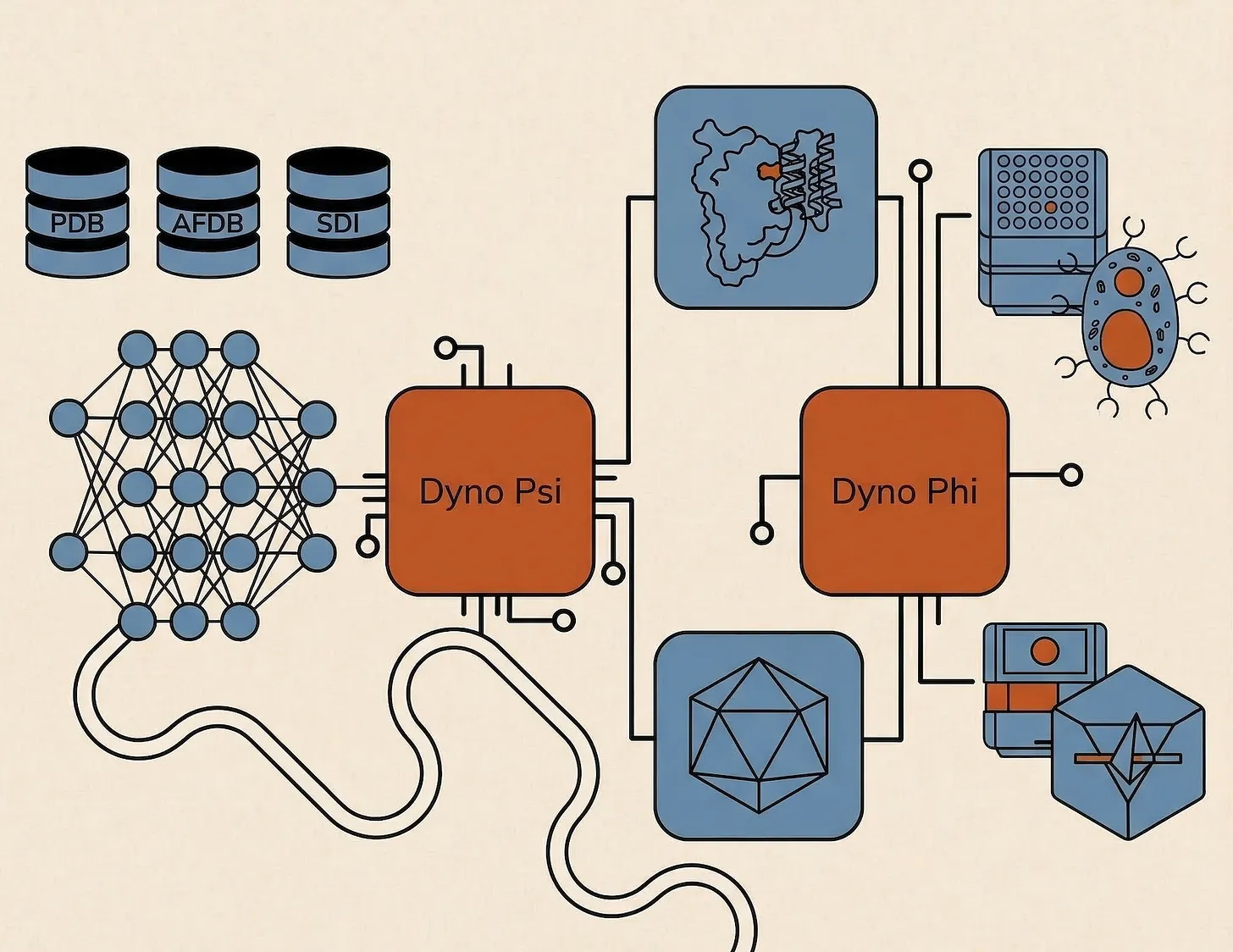
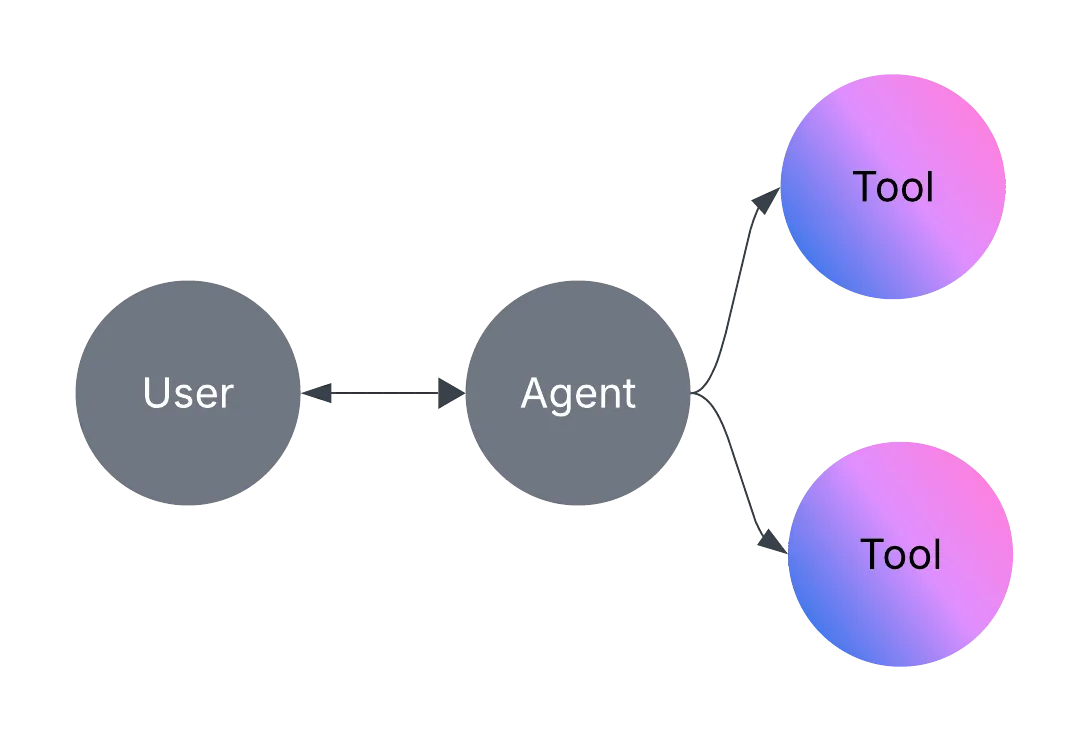
The promise of doing protein design with AI models is to do in one shot on a computer what would take months or even years of trial and error in the lab. This is increasingly becoming a reality. Many models now have double-digit hit rates in vitro. A key component of this success is not just the generative model which proposes sequences, but the in silico metrics that score designs under a set of diverse criteria and eliminate those that are unlikely to succeed. We have seen, including in the recent Nipah Virus design challenge hosted by Adaptyv.bio that optimizing to pass the filters is a viable strategy to find good binders. We recognize the value of this paradigm and to facilitate effective protein design for everyone, today we are announcing an agentic suite, Dyno Phi (and a Claude Code skill) that enables you to use and evaluate best-practice filters for designs. You can bring any set of sequence designs from any source to this platform for filtering and evaluation. For those who want the highest confidence that their designs will validate in the physical world, we also provide experimental calibration for these filters.
While filters are valuable, both to benchmark methods in papers and to increase hit rates, they are not always necessary if you are willing to take some risk. There is also a risk that designing proteins with a stringent filtering approach can result in a type of “mode collapse”--for example if everyone uses similar filters, and as models become very good at passing those filters, validated data itself will become more and more biased training data, and eventually everyone’s protein engineering taste becomes how well it passes this specific set of filters. This would limit AI models to a narrow set of proteins in the vast protein space that could be explored. That limitation could mean lower impact and missed opportunities: last year, Cradle.bio also noticed that the designs which didn’t pass a set of filters to pre-screen candidates for another competition were actually better than those that did.
Given this context, we took a slightly different route when building our generative model Dyno Psi. By scientific upbringing, we at Dyno have spent the past 10 years designing complex capsid proteins for in vivo performance delivering therapeutic genes. This means we have to hedge the risk of many unknowns downstream–because we are not just focusing on binding alone, but many necessary properties we don’t even know about that determine in vivo function. To effectively solve the design capsid problem, we used a high-throughput screening approach paired with sequence-based models. We pride ourselves on producing quantitative, reproducible results at scale, even in mouse and primate studies. Moving to today’s structure-based models for capsids and beyond, we think a similar philosophy will increase impact downstream of design. Namely, instead of building design pipelines that optimize for in silico performance, we wanted to build models that are (1) controllable, (2) scale with compute, and (3) generate a diverse repertoire of plausible candidates. Dyno Psi-1 is our first fine-tuned member of this model for binder design, built with close support from the NVIDIA Healthcare team and NVIDIA DGX Cloud. It is open-weight, trained on an expanded set of synthetic domain interfaces (Dyno SDI) and with sampling code provided. In parallel, we also applied a high throughput yeast display assay to measuring protein-protein interaction at scale, whose measurements correlate highly with gold-standard SPR. We show that
Dyno Psi-1 has good experimental performance for at least one protein (more to come), and that experimental performance scales with computational sampling. The designs by Dyno Psi-1 focus on high structural diversity compared to other open models, and even with light filtering they can generate a high number of binders that validate experimentally.
There is more to come in this line of products from Dyno. We are currently training Dyno Psi for additional capabilities, including modifying small sections of larger proteins without breaking other functions. We are also running more experiments to demonstrate Dyno Psi-1’s performance across other targets. Meanwhile, we are working to better estimate filter impact on success outcomes, including through experimental augmentation.
For now, we hope you enjoy developing with these tools. If you would like to experimentally test any of your designs with Dyno Psi-1, come talk to us. We will only charge you for designs that do validate in the lab ;)
Read the white paper: dynopsi.dynotx.com/dynopsi_whitepaper.pdf.
Dyno Psi-1 is available at https://huggingface.co/dynotx/dynopsi.
Dyno Phi is available at design.dynotx.com and through Claude Code.
Dyno SDI dataset is available at https://huggingface.co/datasets/dynotx/synthetic_dimers.